Two years after San Francisco Mayor London Breed and Supervisory Board Chairman Shamann Walton promised to redirect $120 million over two years from law enforcement to the black community, the Dream Keeper initiative they created is widely hailed for its intent and impact, but questions whether it delivered on its promise to funding.
About half of the program’s funds came from previously approved law enforcement budgets. The following year, the remainder came from the city’s general fund just as Breed increased city support for police and other services as the city’s overall budget grew.
Breed and Walton said they have delivered on their promise to invest in the black community. So far Dream Keeper gave nearly $60 million to 74 organizations, which used the money to train black educators, support a struggling jewelry business, address food insecurity and more.
Breed changed the funding stream to Dream Keeper amid a shift in public safety priorities that has upended cities across the country. Calls for police reform after the murder of George Floyd have been followed by a series of high-profile violent and property crimes that have led some, including the mayor, to want more officers and police funding. police. Political consultant Jim Ross said Breed was “trying to align with what she thought the mainstream was doing on the issue.”
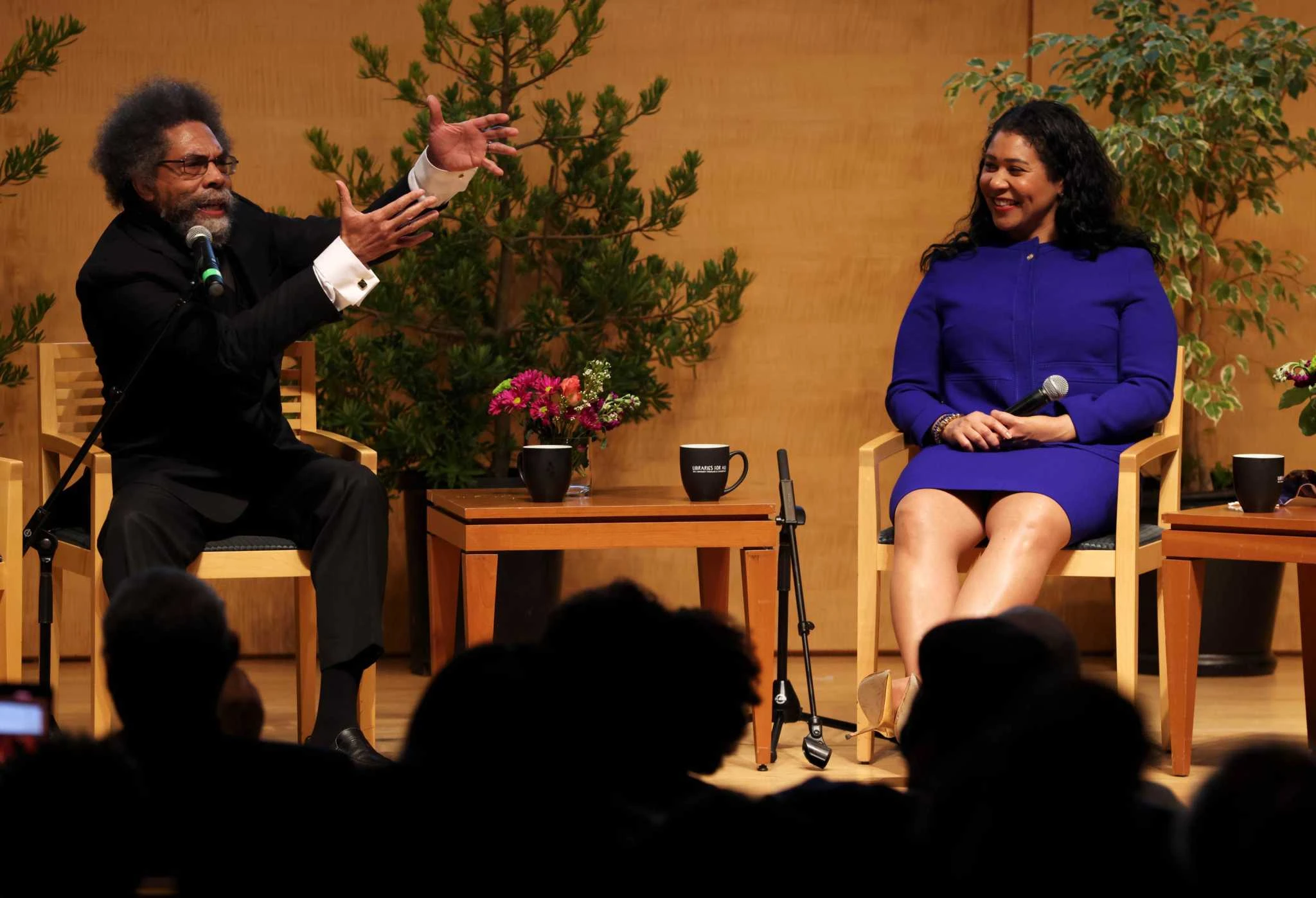
Cornel West (second from left) sings with members of the San Francisco Bay Area Theater Company: Rodney E. Jackson, Jr.; Marcus J. Paige; musical director Othello Jefferson (seated); and Anthone Jackson during “Dreaming Forward: A Year In Review” at the San Francisco Public Library’s Koret Auditorium in San Francisco.
Yalonda M. James/The ChronicleThe change in funding source on Dream Keeper has angered some residents and advocates, though other members of the black community said the investment matters more than where the money comes from.
The oversight board will discuss the program and the grants it has awarded at a hearing on Thursday, where questions about funding could arise.
“We continue to fully support increased funding for the Black community and applaud the efforts of Mayor and Chairman Walton and the entire Board of Overseers to deliver on this promise,” said Supervisor Dean Preston, who will chair the committee on Thursday, in a statement. . “Unfortunately, this was not funded by redirecting money from police budgets. That part of the promise was not delivered.
The black community is only 5% of the city’s population, but they are disproportionately represented in the homeless population, the overdose crisis, and those who are incarcerated. City officials, community members and even philosopher and activist Cornel West, who joined Breed and Walton for a busy and joyous anniversary event celebrating the program in February, support investments to correct inequalities.
In 2020, Breed cut previously approved budgets for the police, sheriff, district attorney, and juvenile probation services by approximately $60 million. In 2021, it injected another $60 million into Dream Keeper, but increased general fund contributions to those departments. The increases were lower percentages than the average for all departments and reflected growth in the city’s budget, with San Francisco generating more revenue. The police department’s total budget of $657 million, which also receives funding from other sources, has declined, but that was primarily due to officer cuts at the airport.
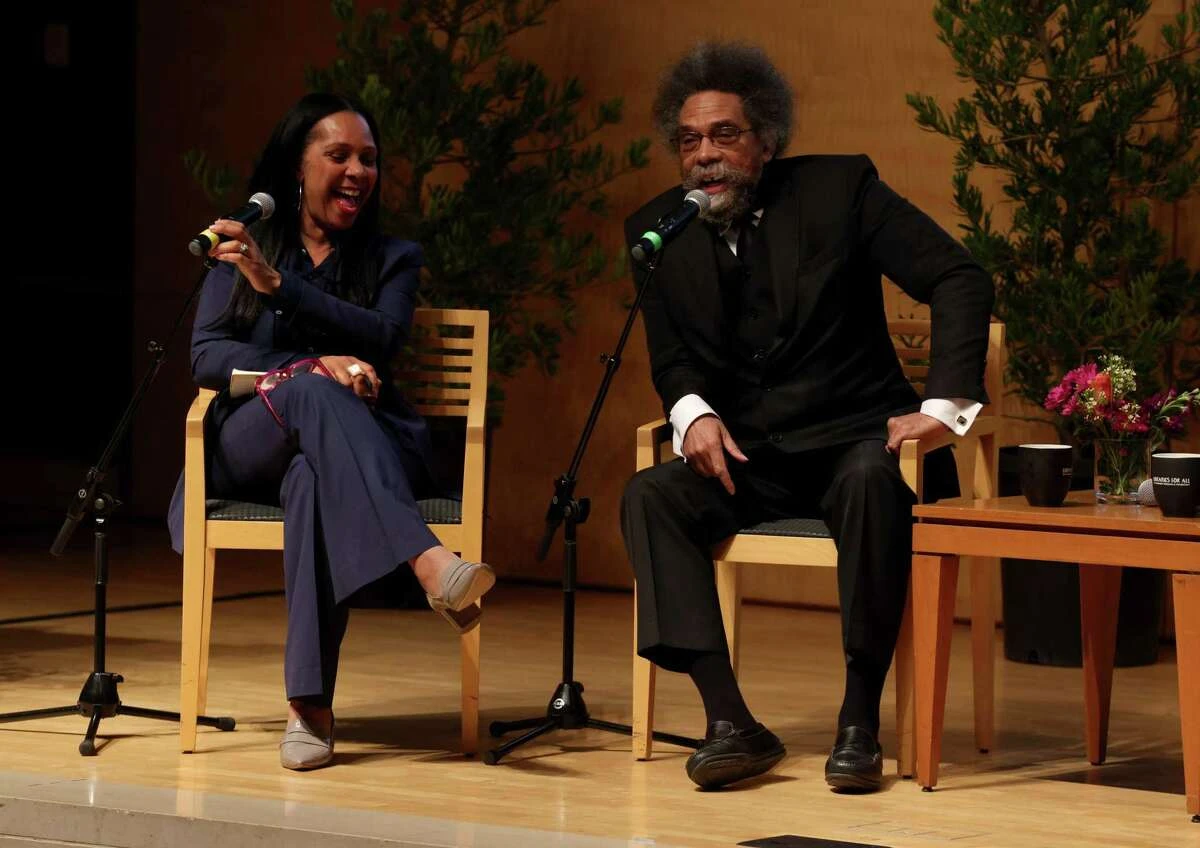
Cornel West (right) sits with Director Sheryl Evans Davis of the San Francisco Human Rights Commission as she moderates ‘Dreaming Forward: A Year in Review’ at the San Francisco Public Library’s Koret Auditorium .
Yalonda M. James/The ChronicleBreed said in July 2020 she was responding to the need to invest in the black community and reform the police, but never cut officers. She denied reversing her stance on police funding in December 2021 when she announced a crackdown on crime and called for more police, saying then that ‘things have changed when it comes to our significant need for law enforcement and that investments are needed”.
The Chronicle asked her last month if she had delivered on her Dream Keeper funding promise.
“Does it really matter?” she says. “It was important to non-black people fighting for police funding and black people just wanted the opportunity to see good things happen in their community…At the end of the day, black people want to make sure that (the police) serve and protect us in the same way they would anyone who is not black.
At the February event, she told the crowd that as a San Francisco native she knew many black people excluded from the city’s prosperity “who ended up drugged, behind bars or dead.”
“I can’t help but take risks in order to transform lives so that the experience I had growing up doesn’t happen to the next generation,” she told the crowd under the guns. cheers.
At the same event, Walton called the investment a “first step toward repairs.” When asked if Dream Keeper had delivered on its funding promise, he replied that “the promise was to make sure we had resources dedicated to the black community.” He declined to answer further questions in a follow-up request.
Ever since the introduction of Dream Keeper, Breed and Walton have clashed over law enforcement. Walton objected to Breed’s rhetoric of using more police to deal with the overdose crisis in the Tenderloin and joined Preston in voting against his declaration of emergency. Preston also voted against the budget last year because he wanted the police to receive less funding.
Aditi Joshi, an organizer with advocacy group Defund SFPD, said the organization supports the Dream Keeper concept, but “implementation is just as important as the principles behind the program.”
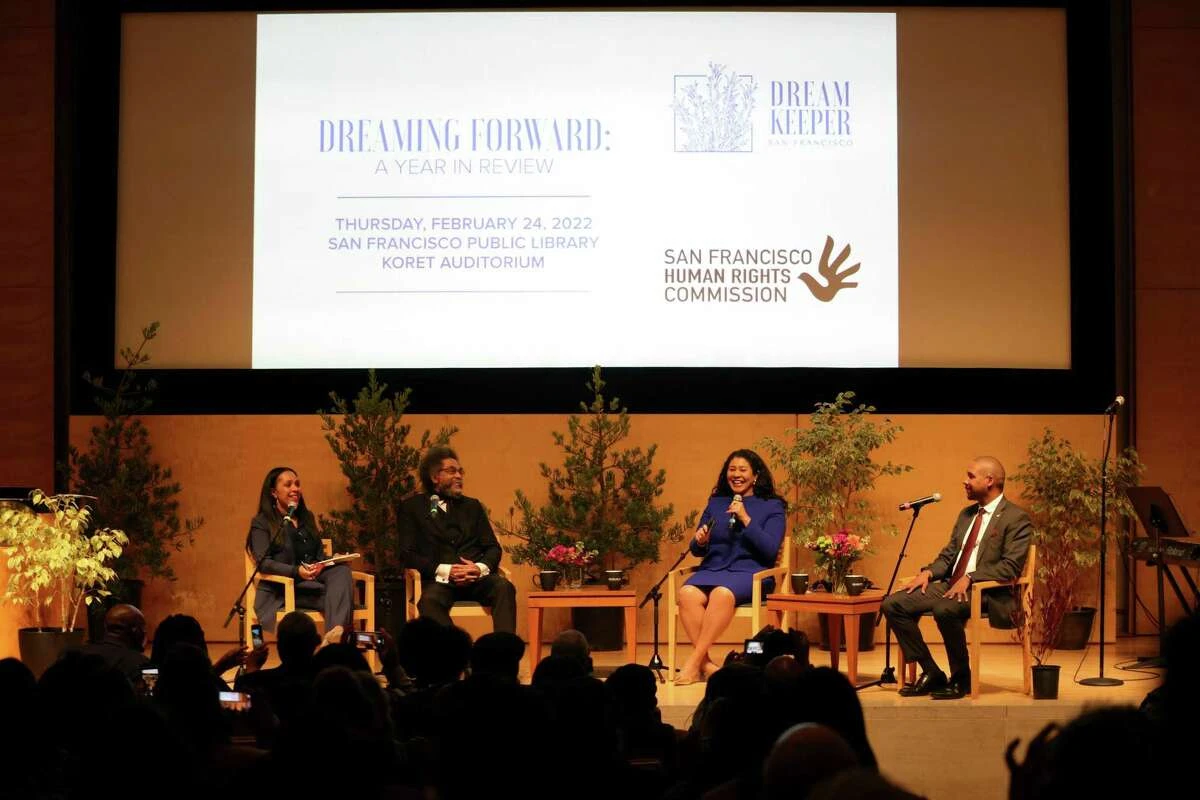
Human Rights Commission Director Sheryl Evans Davis (left) moderates ‘Dreaming Forward: A Year in Review’ with Cornel West, Mayor of London Breed and Supervisory Board Chairman Shamann Walton in the Koret Auditorium from the San Francisco Public Library.
Yalonda M. James/The ChronicleSaidah Leatutufu-Burch, director of the program, said it “was fundamental” that the initial funding came from law enforcement, but “it was never clear to me if it was 60 million dollars a year from the police department”.
“That framework is important,” she said, but added that “what’s most important to me is that the resources are sustainable.”
Phelicia Jones, a city worker and leader of the nonprofit Wealth and Disparities in the Black Community, said the millions donated to Dream Keeper “are making a big difference” but “it still wasn’t enough. “. She urged municipal services to invest more from their own budgets to tackle inequality. Although she criticized that only half of the $120 million came from law enforcement and called for cuts to the police budget given racial disparities, the increase in investment in Dream Keeper was his priority.
“I don’t care how we get the money as long as we get the money,” she said.
The funds have already made a difference for many.
The San Francisco Children’s Council expects to receive $3.5 million over two years. It has already used funds to start a training program for black early childhood educators and child care providers, with 31 students enrolled.
The organization said there are only 10 black-owned licensed child care programs left in San Francisco’s state-funded system. It matters because to research showed that black children with at least one elementary school teacher who looks like them are more likely to enroll in college, said Je Ton Carey, director of Black Early Childhood and Education Achievement.
The Dream Keeper grant didn’t cover all the funding for the program, but when asked if the organization could have started the program without it, Carey said “absolutely not.”
Mallory Moench (her) is a staff writer for the San Francisco Chronicle. Email: [email protected] Twitter:@mallorymoench